
The “Perfect Weather” Illusion
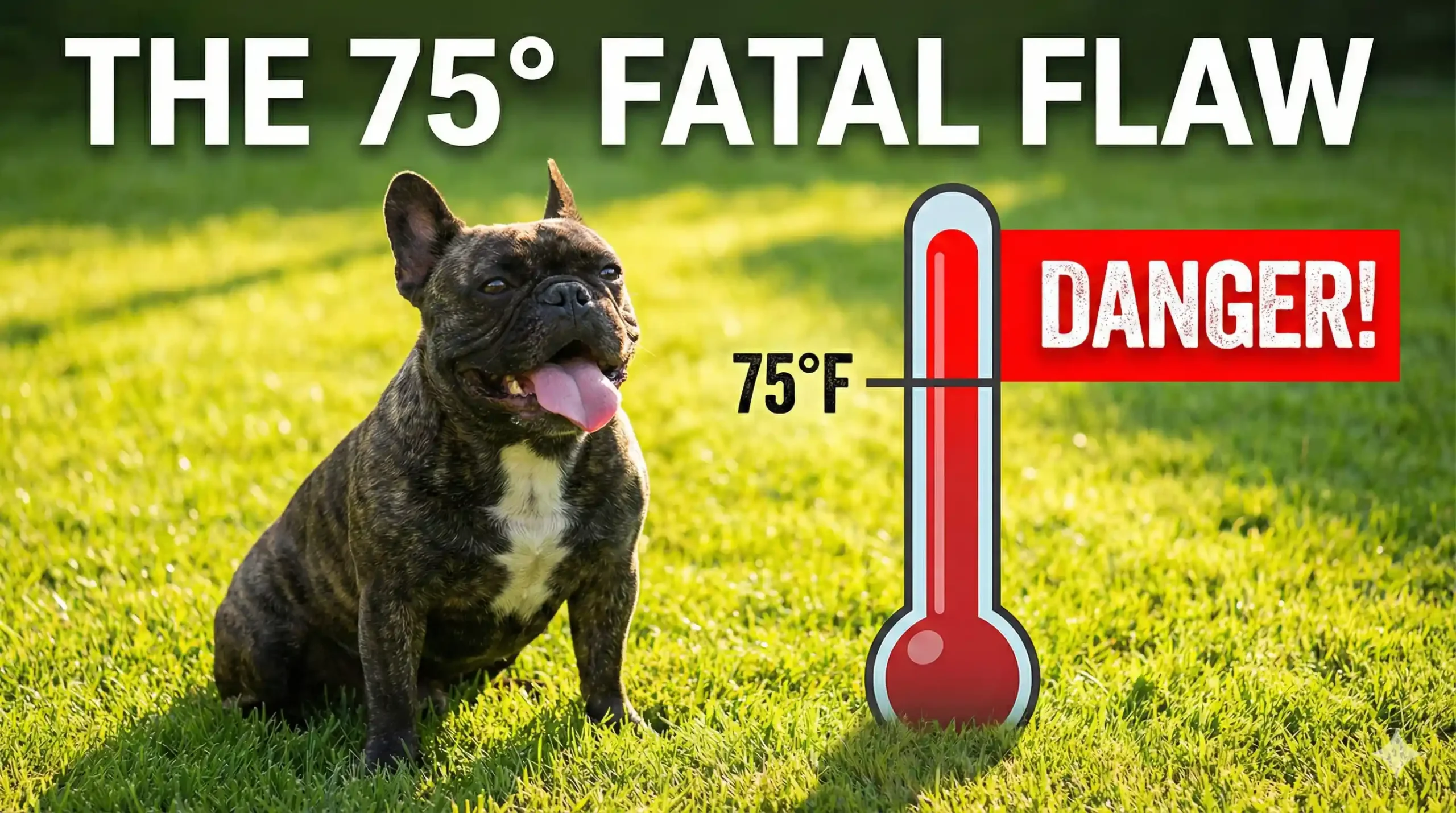
When the weather forecast hits 75 degrees and the sun is shining, your first instinct is to take your dog to the park. For a Golden Retriever, it is a perfect afternoon. For a French Bulldog, English Bulldog, or Pug, it is a ticking time bomb.
When I review emergency veterinary claims, heatstroke is consistently the most devastating—and most expensive—crisis that flat-faced dog owners face. An emergency trip to the veterinary ICU for heat exhaustion rarely costs less than $3,500 to $5,000.
But the physical danger is only half the nightmare. The financial danger is just as real. If your insurance company suspects you made a reckless decision, they will slam you with a “Preventable Negligence” denial, leaving you to pay that massive bill completely out of pocket.
Let’s break down the exact temperature limits for brachycephalic dogs, why throwing ice water on them is actually dangerous, and how to protect your wallet if the worst happens.
The Science: Why They Choke on Warm Air
To understand why a 75-degree day is dangerous, you have to understand how dogs cool down. Dogs do not sweat through their skin like humans do; they cool their core temperature by panting. Air passes over the moist tissue in their long snouts, acting like a natural air conditioner.
If you own a flat-faced breed, that “air conditioner” is fundamentally broken.
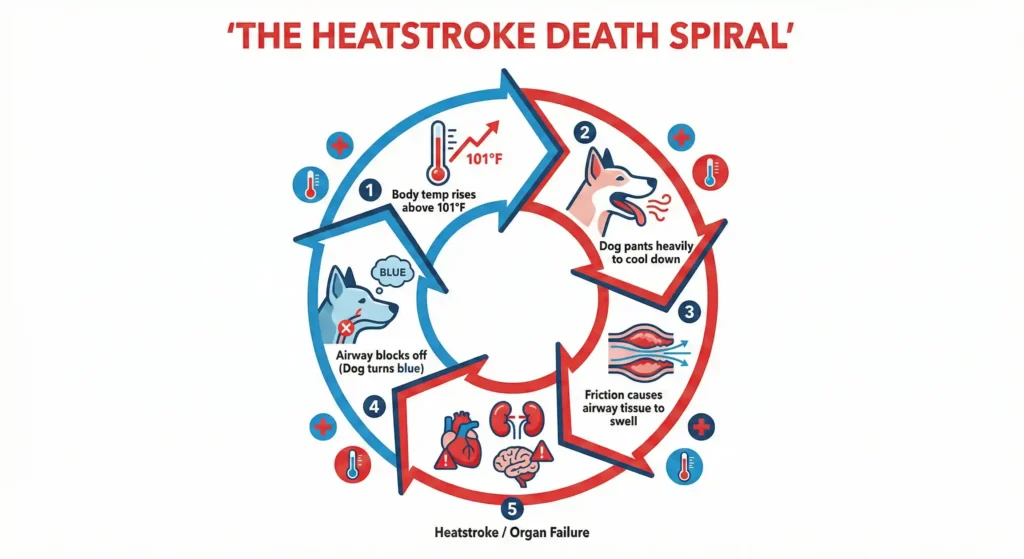
The American College of Veterinary Surgeons clearly explains in their Brachycephalic Syndrome guidelines that these dogs have compromised, narrowed airways (stenotic nares) and excess tissue in their throats (elongated soft palates). When a Frenchie gets hot, they pant harder. But because their airway is so tiny, panting harder actually creates severe inflammation and swelling in the throat.
The harder they pant, the more their airway swells shut. They literally suffocate themselves trying to cool down. It is a vicious, rapid cycle that can lead to organ failure and brain damage in less than 15 minutes.
The “Preventable Condition” Insurance Trap
If your Bulldog collapses from heatstroke and you rush them to the emergency room, the vets will place them in an oxygen-rich ICU cage and start intravenous fluids. It saves their life, but the invoice is staggering.
When you submit this $4,000 claim to your pet insurance company, an adjuster will heavily scrutinize the vet’s notes. Almost all standard pet insurance policies contain a clause excluding coverage for “Negligence or Preventable Conditions.”
If you left your Pug in a parked car with the windows cracked on an 80-degree day, the claim will be denied. If the vet notes say, “Owner admits to taking the dog for a 3-mile run at 2:00 PM in July,” the claim will be denied. The insurer will argue that you intentionally put a high-risk breed in a highly dangerous situation, voiding your coverage.
The 2026 Brachycephalic Temperature Guide
I use this strict temperature chart to determine when it is safe to walk a flat-faced dog. Notice how quickly the “Danger Zone” approaches compared to normal dogs.
| Temperature (°F) | Humidity Level | Action Plan for Flat-Faced Breeds |
| Under 65°F | Any | Safe for normal walks and play. |
| 65°F – 72°F | Low | Safe, but monitor panting. Bring water. |
| 73°F – 79°F | Moderate/High | Caution. Short 10-minute potty breaks only. Do not encourage running. |
| 80°F and Above | Any | DANGER ZONE. Keep indoors with AC. Pavement will burn paws; air is too hot to breathe. |
Pro Tip: Humidity is the silent killer. If it is 72°F but 90% humidity, the air is too thick with moisture for their panting to evaporate and cool them down. Treat high-humidity days like 85-degree days.
The “Ice Water” Myth: What to Do in an Emergency
If your dog’s tongue turns dark purple or blue, their gums get bright red, or they vomit and collapse, they are in active heatstroke. You have minutes to act before permanent brain damage occurs.
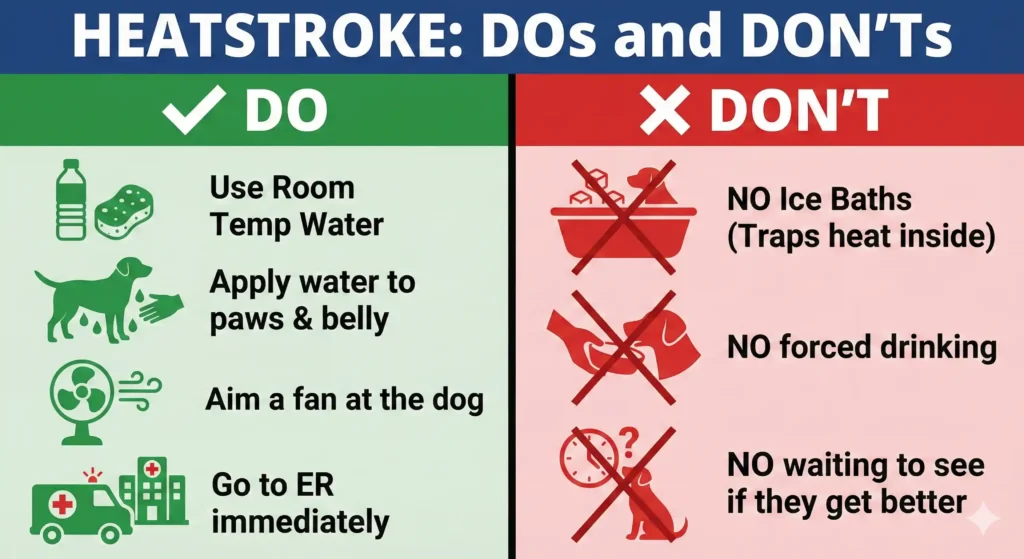
Do NOT throw them in a bathtub full of ice water.
According to the AVMA’s official warm weather safety guidelines, extreme cold water causes their blood vessels to constrict rapidly. This actually traps the boiling heat inside their internal organs, accelerating organ failure.
Instead, follow this exact protocol while someone else starts the car to drive to the emergency vet:
- Move the dog into the air conditioning immediately.
- Pour room temperature (cool, not freezing) water over their belly, paws, and the back of their neck.
- Aim a fan directly at them to maximize evaporation.
- Do not force them to drink water if they are choking or disoriented; let them lick an ice cube instead.
How to Guarantee Your Insurance Covers It
To ensure a heatstroke emergency is covered by your provider, you must prove you were acting responsibly.
Never leave a flat-faced dog outside unattended in the summer. If you have a dog walker, instruct them in writing that summer walks are strictly limited to 5-minute potty breaks in the shade.
Most importantly, make sure your insurance policy covers Hereditary and Congenital Conditions without a breed exclusion. If your dog suffers a heat emergency, the resulting veterinary paperwork will almost certainly mention their Brachycephalic airway. If your policy excludes BOAS, the insurer might try to use that exclusion to deny the heatstroke claim, arguing that the genetic airway caused the collapse.
Always secure a premium policy before the summer heat hits.
Frequently Asked Questions (FAQs)
-
Are cooling vests actually safe for French Bulldogs?
Yes, but they must be used correctly. Cooling vests work through evaporation. You soak them in water, wring them out, and put them on the dog. However, once the vest dries out completely, it acts like a winter coat and traps heat against their body. If you use one, you must keep re-wetting it.
-
Why does my Pug sound congested after being in the heat?
That “congestion” sound is the inflammation in their soft palate and throat caused by heavy panting. The tissue has swollen, narrowing their windpipe. Bring them into a cool, air-conditioned room immediately and keep them completely calm until the swelling subsides and their breathing sounds normal again.
-
Will pet insurance cover the cost of oxygen therapy?
Yes. If the underlying cause of the emergency (like accidental heat exhaustion) is covered by your policy, the resulting treatments—including ICU oxygen cages, IV fluids, and bloodwork—are fully reimbursable under standard accident and illness plans.
YMYL & Financial Disclaimer: The information provided on Flat Face Insurance is for educational and consumer advocacy purposes based on my independent research. I am not a licensed veterinarian or an insurance underwriter. Heatstroke is a fatal medical emergency; never attempt to treat it entirely at home without seeking immediate veterinary care. Insurance definitions of “negligence” vary widely by provider. Always request a full sample policy document from your insurer and read the “Exclusions” page carefully before making a financial decision.