
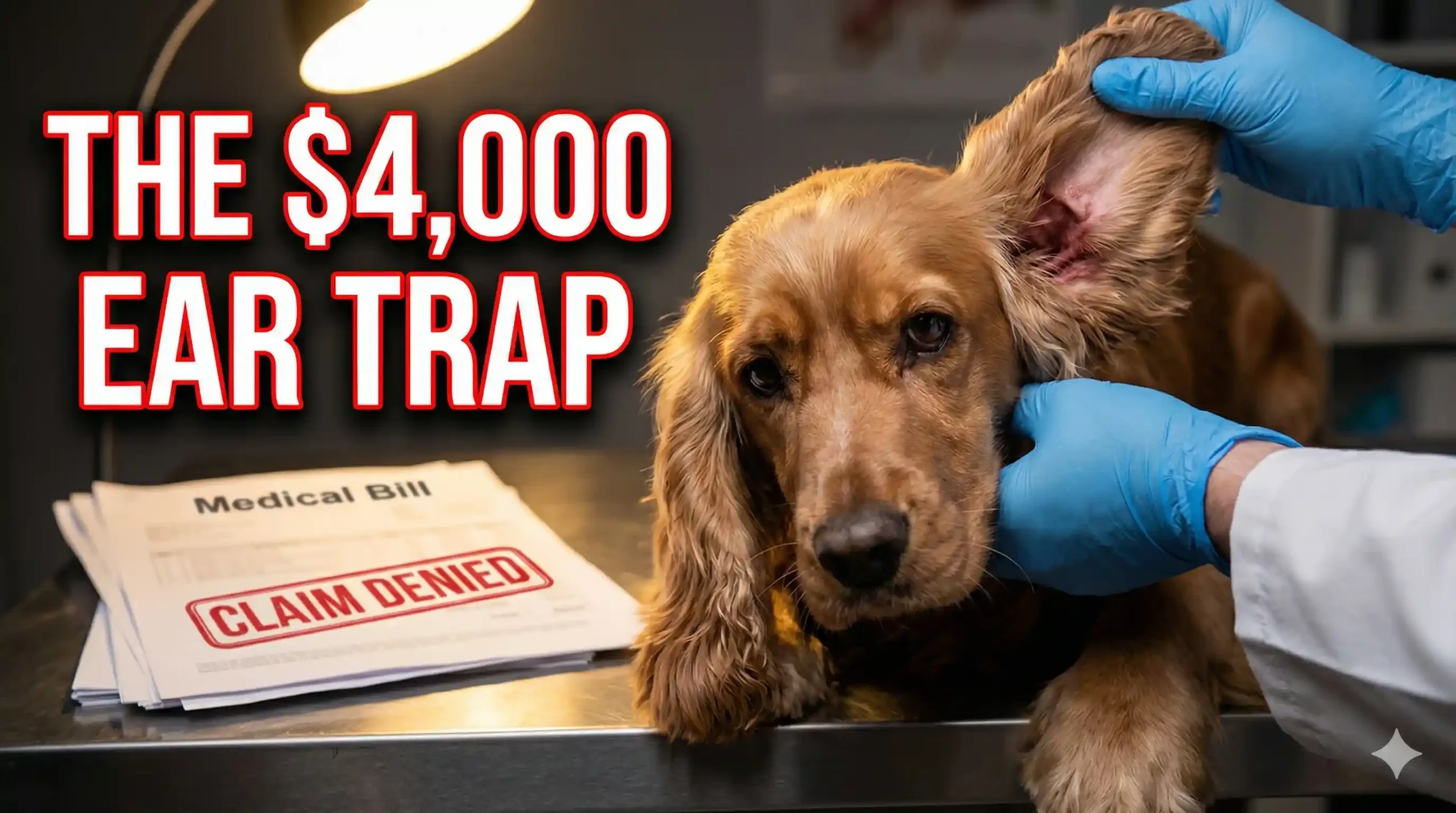
If you own a Cocker Spaniel, you know “the smell.” It’s that faint, yeasty, musty odor that comes from under those beautiful, long floppy ears.
We think it’s normal. Insurance companies think it’s a loophole.
Cocker Spaniels are famous for two things: their merry personalities and their chronic ear problems. While you see cute ears, insurers see a lifetime liability. The very anatomy that makes them adorable also makes them a bacterial breeding ground.
In this guide, we are breaking down the “Chronic Ear Trap”—why a single vet visit for “dirty ears” as a puppy could lead to a $4,000 surgery claim denial years later, and exactly how to protect yourself.
Why Insurers Hate Cocker Ears (The Science)
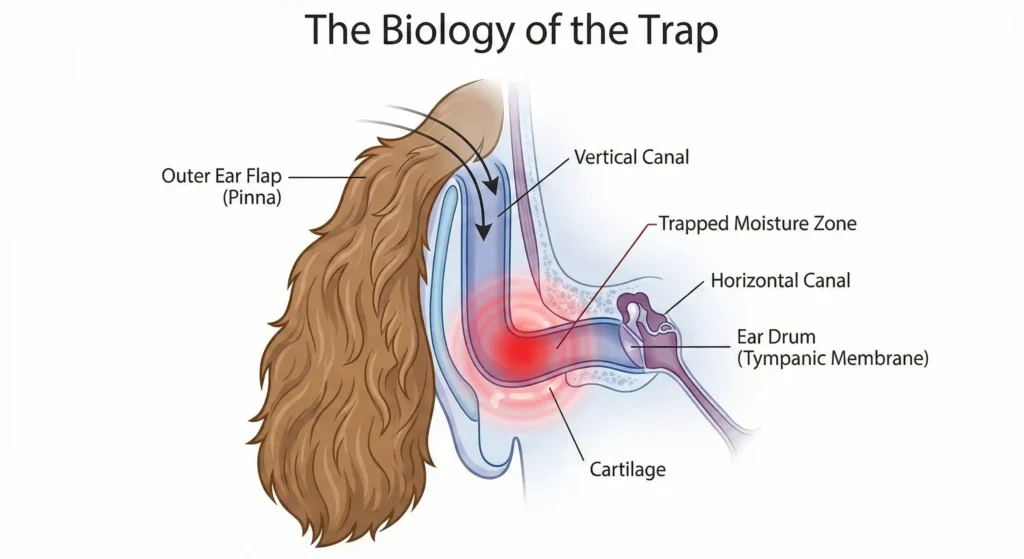
It’s not just bad luck; it’s biology. Cocker Spaniels have heavy, fur-covered ear flaps that seal off the ear canal. Unlike humans, their ear canal is shaped like an “L”.
When moisture gets in (from baths or humidity), it gets trapped deep in the “L” bend. The heavy flap prevents air from drying it out. This creates a dark, warm, moist environment—perfect for yeast and bacteria to explode.
If this happens repeatedly, the ear canal calcifies (turns hard as bone), leading to irreversible pain. The only fix is TECA (Total Ear Canal Ablation)—a massive surgery that removes the entire ear canal, costing upwards of $4,000 to $6,000.
And this is where the insurance nightmare begins.
The “Pre-Existing” Loophole That Ruins Claims
Most owners get insurance when their dog is young. But perhaps at 6 months old, you took your puppy to the vet because they were shaking their head. The vet cleaned the ears and wrote in the notes: “Minor yeast infection, treated.”
You think it’s over. The insurance company thinks it just began.
Three years later, when your dog needs that expensive surgery, the insurer will pull that puppy record. They will classify ear issues as a “Pre-Existing Chronic Condition” based on that one minor visit.
The Result: Claim Denied. You pay $4,000 out of pocket.
How to Beat the System: The “Clean Slate” Protocol
You can still protect your dog, but you need to be proactive.
1. The Weekly “Sniff & Flip”
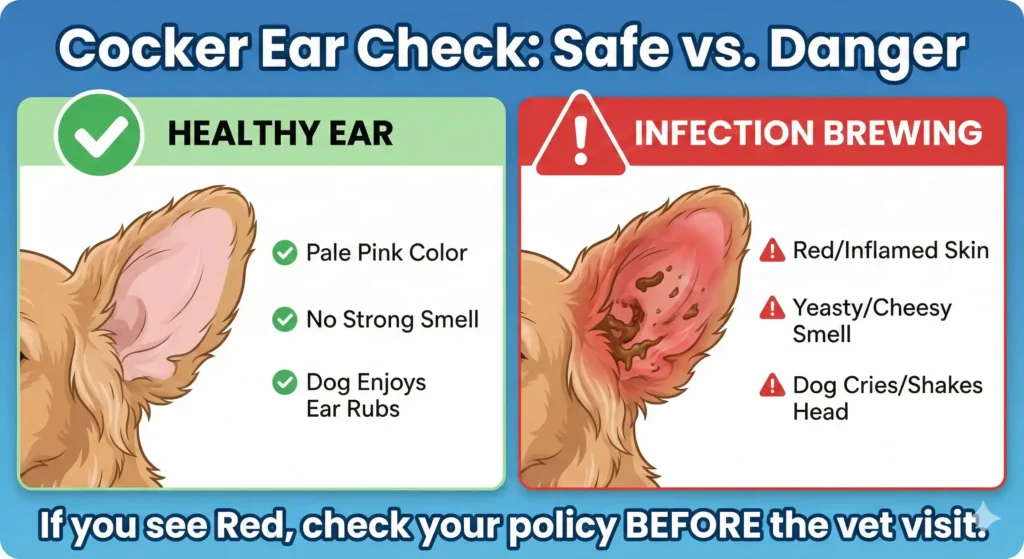
Make this a ritual. Every Sunday, flip the ears back and smell them. If the odor changes from “doggy” to “yeasty bread,” start cleaning immediately with a vet-approved drying solution before it becomes a medical record.
2. Get a “Clearance Exam”
If you are switching insurance providers or just finished a waiting period, take your dog to the vet specifically for an ear check. Ask the vet to write clearly in the notes: “Both ear canals are currently healthy, clean, and free of infection.” This document is your golden shield against future denials.
3. Check for “Curable Conditions” Clauses
Some modern insurance providers (like Spot, ASPCA, or Lemonade) distinguish between “incurable” and “curable” pre-existing conditions. If your dog had an ear infection but has been symptom-free for 12 months, they might reset the clock and cover future ones. Read the fine print.
Conclusion: Don’t Let Their Ears Break Your Bank
We love Cocker Spaniels for their floppy ears, but we have to respect the financial risk they carry. Owning this breed means accepting that ear care isn’t optional—it’s a weekly medical necessity.
Don’t wait for the surgery quote to check your insurance policy. Do it today. Ensure that “chronic otitis” isn’t buried in your exclusion list.
Protect the ears. Protect your wallet.
Frequently Asked Questions (FAQs)
-
Is TECA (ear canal removal) surgery covered by pet insurance?
Yes, usually under “Major Medical” or “Illness” plans, BUT only if the ear infections are not deemed pre-existing. If your dog has a long history of ear trouble before you bought the policy, it will likely be denied.
-
How often should I clean my Cocker Spaniel’s ears to prevent denial?
Vets recommend weekly cleaning, and always after swimming or baths. Using a drying solution is critical. Keeping them clean reduces vet visits, which keeps your medical record clean.
-
Does insurance treat both ears as one condition (Bilateral Exclusion)?
Often, yes. If your dog had chronic infections in the left ear before insurance, many providers will exclude the right ear as well, arguing that the dog is predisposed to the issue globally.