
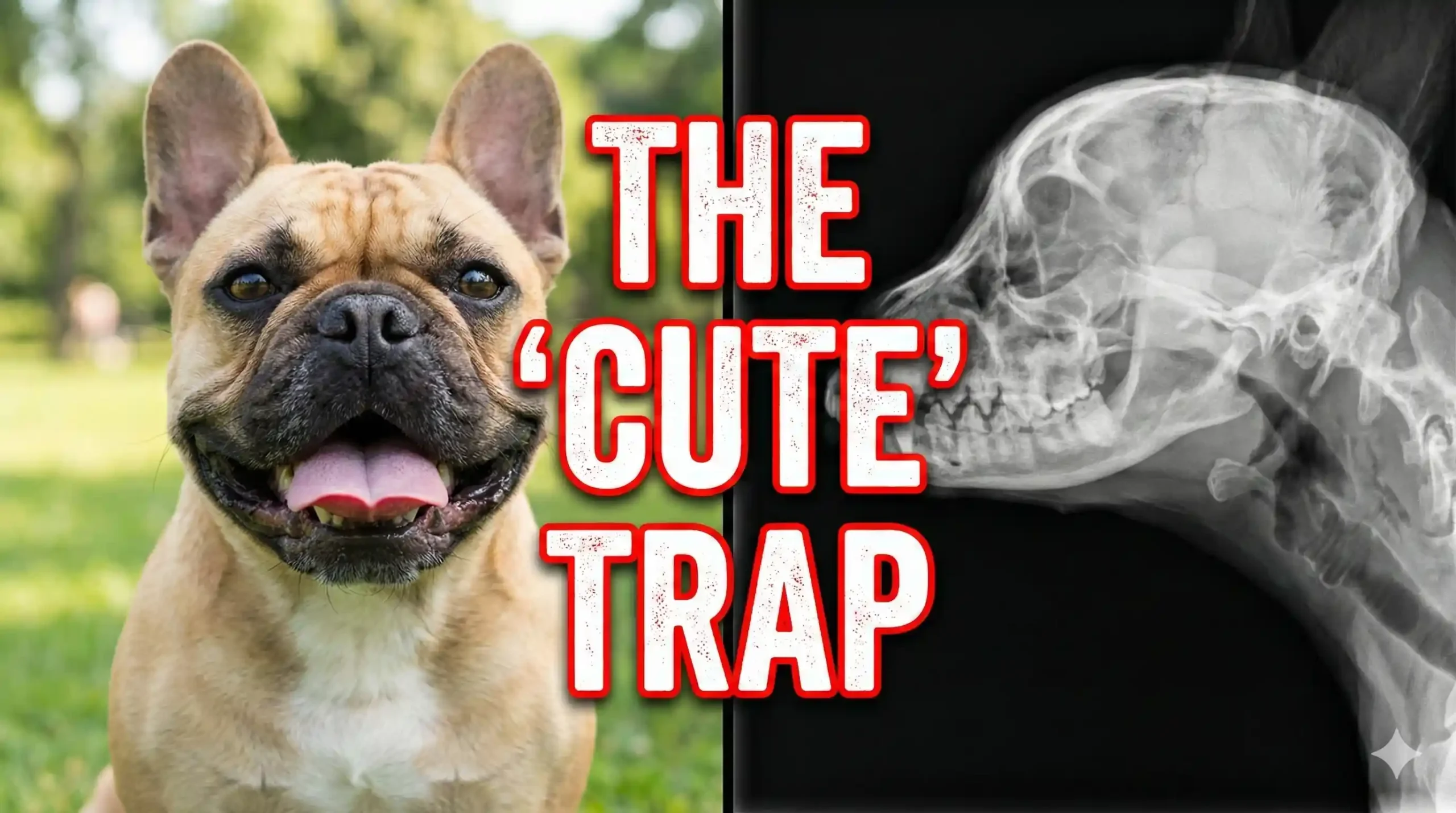
The $5,000 Snore: Why “Cute” Can Cost You
If you own a Frenchie or a Pug, you know the sound. It’s that snort, grunt, or snore that happens when they get excited or fall asleep. To most owners, it’s a badge of honor—part of the breed’s goofy charm.
But to an insurance adjuster, that sound isn’t cute. It is evidence.
Here is the brutal reality: Brachycephalic Obstructive Airway Syndrome (BOAS) is the #1 health threat to flat-faced dogs. The surgery to fix it—widening the nostrils and shortening the soft palate—costs between $2,000 and $5,000 (and up to $10,000 in major cities)— but this full BOAS cost breakdown shows why some owners pay double..
Yet, nearly 80% of pet insurance claims for this surgery are denied— which raises the real question: will your insurance actually pay for BOAS surgery?. Why? Because most owners fall into specific “fine print” traps before they even sign up.
At Flat Face Insurance, we analyze hundreds of policies to keep you safe. Here is why claims get denied and exactly how to beat the system.

Trap #1: The “Clinical Signs” Loophole
This is the most common reason for denial. Most owners think a condition is only “pre-existing” if a vet formally diagnoses it. This is false.
Insurance companies look for “clinical signs.” If you took your puppy to the vet at 4 months old for a check-up, and you casually mentioned, “He snores a little when he sleeps,” the vet wrote it down in the notes.
Fast forward two years. Your dog needs BOAS surgery. The insurance company pulls those puppy records, sees the note about “snoring,” and stamps your claim DENIED as a pre-existing condition.
The Fix:
- Get Insured Early: Ideally at 8 weeks old, before any vet notes are written.— ideally inside the coverage “golden window” before symptoms appear.
- Review Medical Records: Before switching insurance, ask your vet for a copy of your dog’s history. Read it like an underwriter. If “loud breathing” is noted, standard policies might already lock you out.
Trap #2: The “Congenital” Exclusion
Some budget insurance providers exclude “Congenital or Hereditary Conditions.”— the same loophole used in cheap accident-only plans that deny airway surgery.
- Congenital: Present from birth.
- Hereditary: Passed down through genes.
Since a flat face is genetic, some terrible policies classify BOAS as a condition the dog was “born with” and therefore refuse to cover it. This is a massive red flag. You must ensure your policy explicitly states that Hereditary Conditions are Covered.

The “Good vs. Bad” Policy Test
Not all insurance is built for flat faces. Use this table to check if your current policy is safe or if you are at risk.
| Feature | ❌ The “Trap” Policy | ✅ The “Flat-Face Friendly” Policy |
| BOAS Coverage | Excluded or requires a strict 12-month waiting period. | Covered after standard illness waiting period (usually 14-30 days). |
| Pre-Existing Definition | Denies based on any prior snoring or snorting notes. | Distinguishes between “normal breed sounds” and “clinical illness.” |
| Nares (Nostrils) Correction | Considered “Cosmetic” and denied. | Covered as “Medically Necessary” for breathing function. |
| Soft Palate Surgery | Often capped at a low payout limit (e.g., $500). | Covered up to the full annual limit (e.g., $10,000+). |
If you’re unsure which providers pass this test, see this BOAS insurance coverage comparison.
How to Ensure Your Claim gets Paid
If you suspect your dog might need this surgery in the future— especially the best age to schedule BOAS correction safely, follow these 3 steps immediately:
- The “Clean Slate” Check: If you are buying a new policy, ensure your dog has had a physical exam within the last 12 months that does not mention respiratory distress.
- The Waiting Period Watch: Do not book a consultation for surgery until after your policy’s illness waiting period has passed (usually 14 days). If you visit the vet on Day 10 of your policy, the condition is permanently excluded— many owners fall into pet insurance waiting period traps here..
- Get “Curable” Clauses: Look for insurers that offer “Curable Pre-Existing Conditions.” If your dog had a respiratory infection once but healed, some top-tier insurers will wipe the slate clean after 12 months.
Conclusion: Protect Their Breath
Your Frenchie’s breathing isn’t just a “quirk”—it’s their lifeline. Don’t let a generic insurance company treat your specialized breed like a standard dog. The difference between a $5,000 debt and a $500 deductible often comes down to planning — and understanding the true first-year medical cost of owning a Frenchie.
Need a policy audit? At Flat Face Insurance, we help you find plans that actually respect the breed.
Frequently Asked Questions (FAQs)
-
Does pet insurance cover soft palate surgery for French Bulldogs?
Yes, but only if you have a comprehensive “Accident & Illness” plan and the condition was not noted as pre-existing before you bought the policy. “Accident Only” plans will never cover this.
-
How much does BOAS surgery cost in 2025?
On average, expect to pay between $2,500 and $4,500. However, in high-cost areas like California or New York, specialists may charge up to $8,000 for the full package (Nares, Palate, and Saccules).
-
At what age do Frenchies usually show signs of BOAS?
Signs can start as early as 6 months, but severe symptoms often peak between 2 and 3 years old. This is why insuring them as puppies (8-10 weeks) is critical to avoid the “pre-existing” denial.
-
My dog snores loudly. Is it too late to get insurance?
Not necessarily. While the “snoring” might be pre-existing, you can still get coverage for other common Frenchie issues like spinal (IVDD) injuries, allergies, or accidents. However, the breathing surgery specifically might be excluded if the snoring is documented in vet notes.