
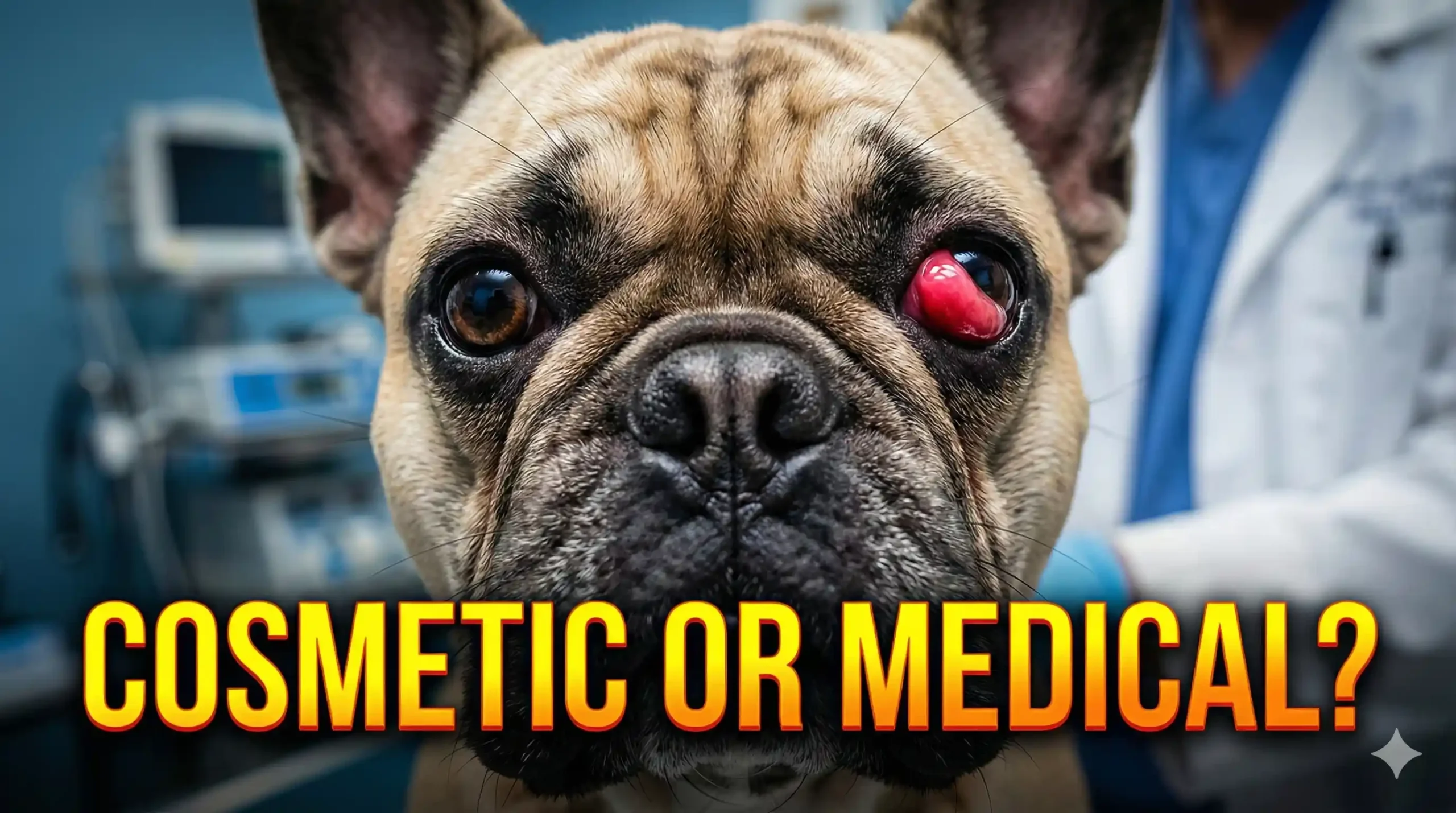
The Morning You Wake Up to a “Red Monster”
It usually happens overnight. You put your adorable Frenchie or Pug to bed, and in the morning, they look up at you with a terrifying, bright red, fleshy blob protruding from the corner of their eye.
Panic sets in. Is it a tumor? Did they scratch their eye? Is he going blind?
This is the infamous “Cherry Eye” (Prolapse of the Nictitating Membrane). While it looks like a scene from a horror movie, it is a common genetic weakness in flat-faced breeds. But the real horror story isn’t the eye itself—it’s the bill you are about to receive.
Correcting this “defect” involves delicate microsurgery that can cost upwards of $2,500 per eye.
When owners rush to check their insurance policy, many are shocked to find their claim denied. Why? Because some insurers try to classify this surgery as “Cosmetic,” while others use the dreaded “Bilateral Exclusion.” In this guide, I will help you navigate the confusing world of eye surgery claims and ensure you don’t pay that $2,500 out of pocket.
Why Is a “Little Tuck” So Expensive?
Many owners assume fixing Cherry Eye is a simple procedure, like stitching up a cut. It is not.
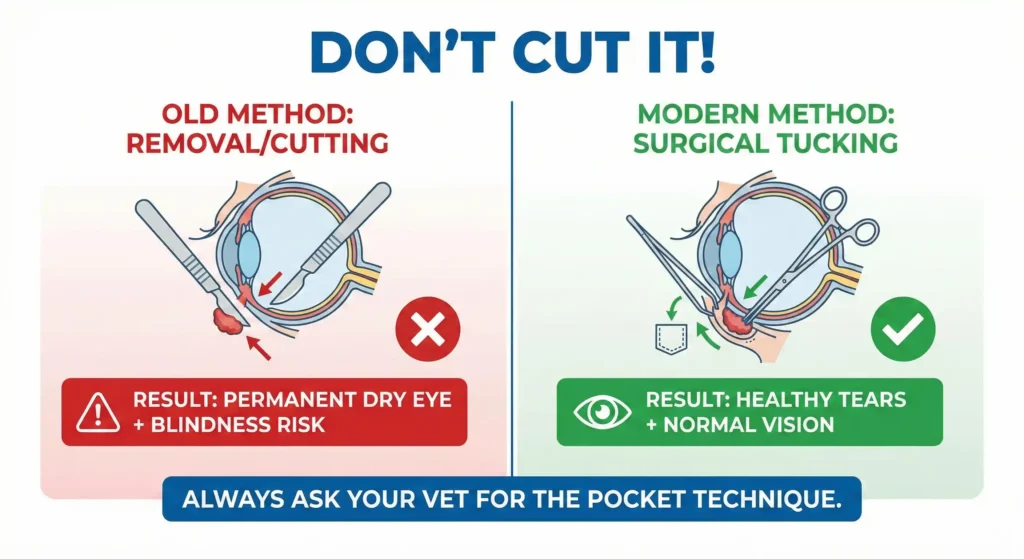
In the past, vets would simply slice the red gland off. Do NOT let a vet do this. The third eyelid gland produces 40% of your dog’s tears. If you remove it, your dog will suffer from “Dry Eye” (Keratoconjunctivitis Sicca) for the rest of their life, leading to painful ulcers and blindness.
Modern board-certified ophthalmologists use a technique called the “Pocket Technique.” They create a tiny pocket inside the eyelid and surgically tuck the gland back into place to preserve tear production. This requires general anesthesia, microsurgical equipment, and a highly skilled surgeon.
According to the American College of Veterinary Ophthalmologists (ACVO), preserving the gland is critical for brachycephalic breeds who already have bulging, exposed eyes. This expertise is why the price tag jumps from a simple $500 procedure to a $2,500 specialist surgery.
The “Bilateral” Insurance Trap
This is the single most common reason Cherry Eye claims are denied.
Cherry Eye is an anatomical defect. If your Frenchie develops it in their Left Eye today, there is a statistically high chance they will develop it in their Right Eye later.
Here is the trap: If your dog had Cherry Eye in one eye before you bought your insurance policy, many companies will apply a “Bilateral Exclusion.” They will say, “Since the dog had the condition in the left eye pre-policy, the condition is considered pre-existing for the entire body.”
This means when the Right Eye pops out six months later, they will deny that claim too.
I have written extensively about the Bilateral Exclusion Trap, and it is critical to understand that your dog’s eyes are viewed as a “set” by insurance adjusters. If one is compromised, the other is often uninsurable.
Is It Considered “Cosmetic”?
This is a rare but frustrating loophole. Some budget-tier insurance plans classify Cherry Eye correction as “Cosmetic Surgery” (similar to ear cropping or tail docking) because the dog can technically survive with the red blob, even though it is uncomfortable and prone to infection.
How to fight this:
If your insurer denies the claim as cosmetic, you must get your vet to write a forceful letter of medical necessity. The vet must state: “The prolapsed gland is causing chronic conjunctivitis, risk of corneal ulceration, and blocked vision. Surgery is medically necessary to prevent permanent ocular damage.”
This usually forces the insurer to reclassify the claim from “Cosmetic” to “Medical Illness.”
Remember, if you made the mistake of buying an Accident-Only insurance plan, Cherry Eye will never be covered. Insurers classify it strictly as an illness or genetic defect, never as an accident.
The Waiting Period Game
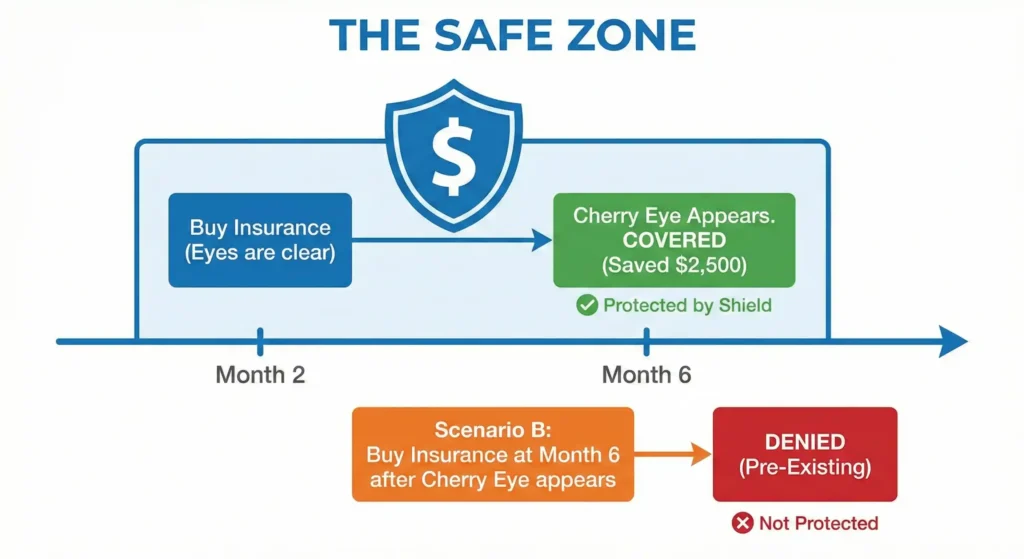
Just like with BOAS or IVDD, timing is everything. Cherry Eye often appears in puppies between 6 and 12 months old.
If you buy insurance today, you typically have to wait 14 days for illness coverage to kick in. If the “Red Bubble” appears on Day 13, you are out of luck. The entire surgery will be flagged as pre-existing.
This is why I constantly advise owners to get coverage the moment they bring their puppy home. You are racing against their genetics. You need to secure your policy and clear those insurance waiting periods while your puppy’s eyes are still clear and bright.
Frequently Asked Questions (FAQs)
-
Can Cherry Eye fix itself?
Rarely. Sometimes, with massage and steroid drops, the gland might pop back in temporarily. But because the connective tissue is weak, it almost always pops back out again eventually. Surgery is the only permanent fix.
-
How much does dog eye surgery cost?
For a board-certified ophthalmologist, expect to pay $1,800 to $2,800 per eye. If both eyes need to be done (which is common), the bill can exceed $4,000. This often includes anesthesia, the surgery, and follow-up checks.
-
Is Cherry Eye genetic in French Bulldogs?
Yes. It is considered a hereditary condition. This is why you must ensure your insurance policy includes “Hereditary & Congenital” coverage. Without this specific clause, the insurer can deny the claim simply because your dog is a Frenchie.
Disclaimer: The information provided on Flat Face Insurance is for educational purposes based on independent research of US veterinary costs. I am not a licensed veterinarian or insurance underwriter. Eye conditions can escalate quickly; always consult a board-certified veterinary ophthalmologist for a diagnosis. Always read your specific policy’s “Exclusions” page regarding bilateral conditions before purchasing.