
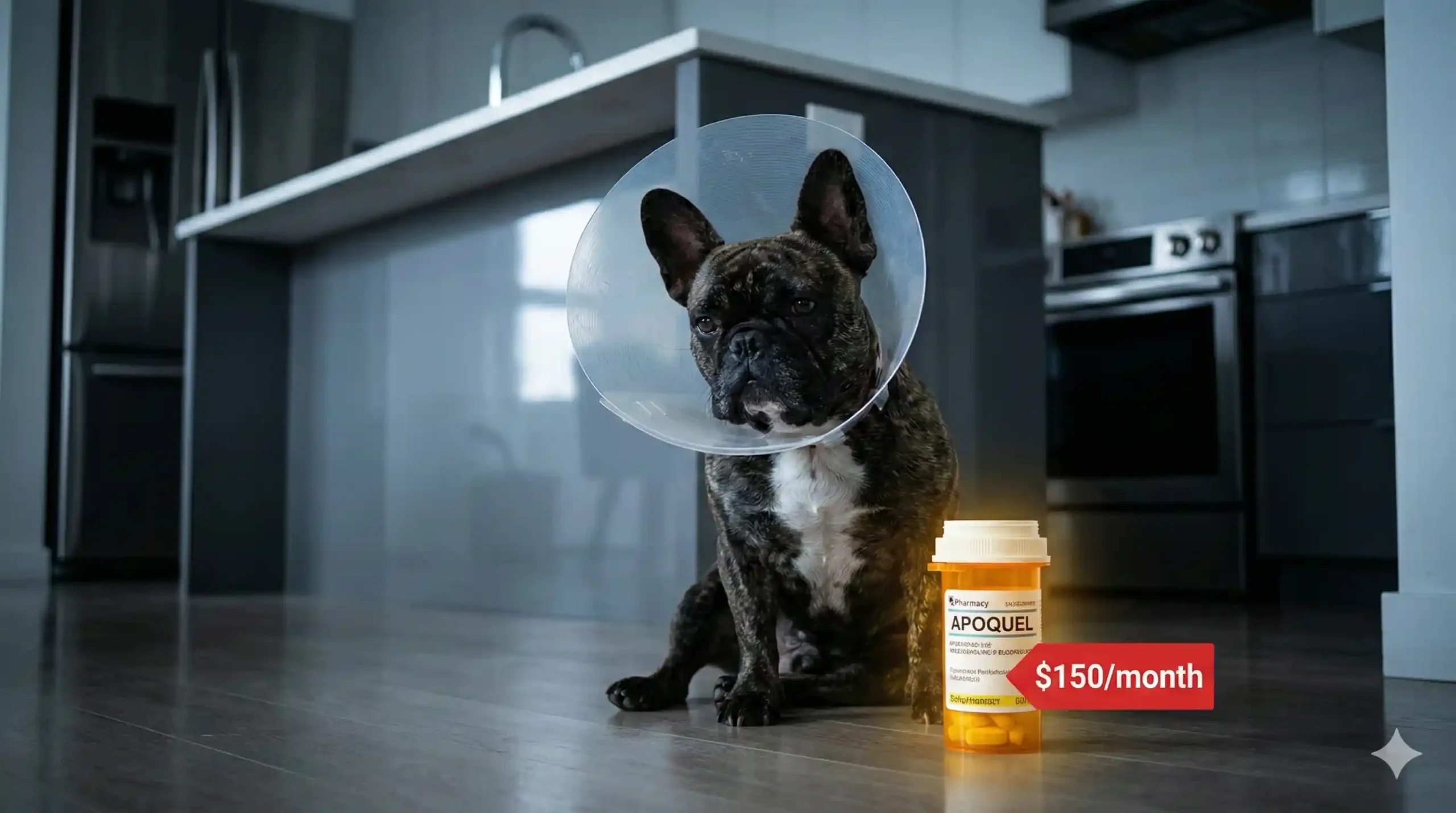
The Subscription You Never Signed Up For
If you own a French Bulldog, English Bulldog, or Pug, you are probably obsessed with their adorable, squishy wrinkles. But those wrinkles hide a dark, incredibly expensive secret.
I talk to owners every day who thought they were prepared for the vet bills. They budgeted for airway surgery, and they knew about spinal risks. But they never expected the “Itchy Dog Tax.”
One day, your puppy starts licking their paws. Then they start scratching their ears. A week later, their belly is bright red, and their facial folds smell like corn chips. You take them to the vet, and you are introduced to the world of Atopic Dermatitis.
Unlike a broken bone that heals, severe canine allergies are a lifelong disease. You do not cure them; you manage them with a monthly chemical subscription. When calculating the true ROI of pet insurance, chronic dermatology bills are often the silent killer that drains your bank account month after month.
Let’s break down exactly what allergy management costs in 2026, why insurance companies fight these claims tooth and nail, and how to protect yourself before the itching starts.
The 2026 Cost of Relief: Apoquel vs. Cytopoint
When a flat-faced dog has severe environmental or food allergies, cheap over-the-counter Benadryl rarely works. Your vet will almost certainly prescribe one of two gold-standard treatments: Apoquel (a daily pill) or Cytopoint (a monthly injection).
These drugs are absolute miracles for stopping the itch. They are also incredibly expensive. Because Bulldogs are heavy, stocky dogs, they require high doses.
Here is what the math looks like over a single year:
| Allergy Treatment | Frequency | Estimated Cost (2026) | Annual Cost |
| Apoquel (Pills) | Daily | $100 – $150 / month | **$1,200 – $1,800** |
| Cytopoint (Injection) | Every 4 to 8 weeks | $120 – $200 / shot | **$1,440 – $2,400** |
| Medicated Shampoos | Weekly | $30 – $50 / bottle | **$300 – $500** |
| Prescription Diet (Hydrolyzed) | Daily | $100 – $130 / bag | $1,200 – $1,560 |
| Total Out-of-Pocket | The Final Bill | **$4,140 – $6,260 per year** |
According to the specialists at the American College of Veterinary Dermatology (ACVD), Bulldogs often suffer from compromised skin barriers that allow yeast and staph infections to thrive in their folds. This means you aren’t just paying for allergy meds; you are paying for constant rounds of antibiotics.
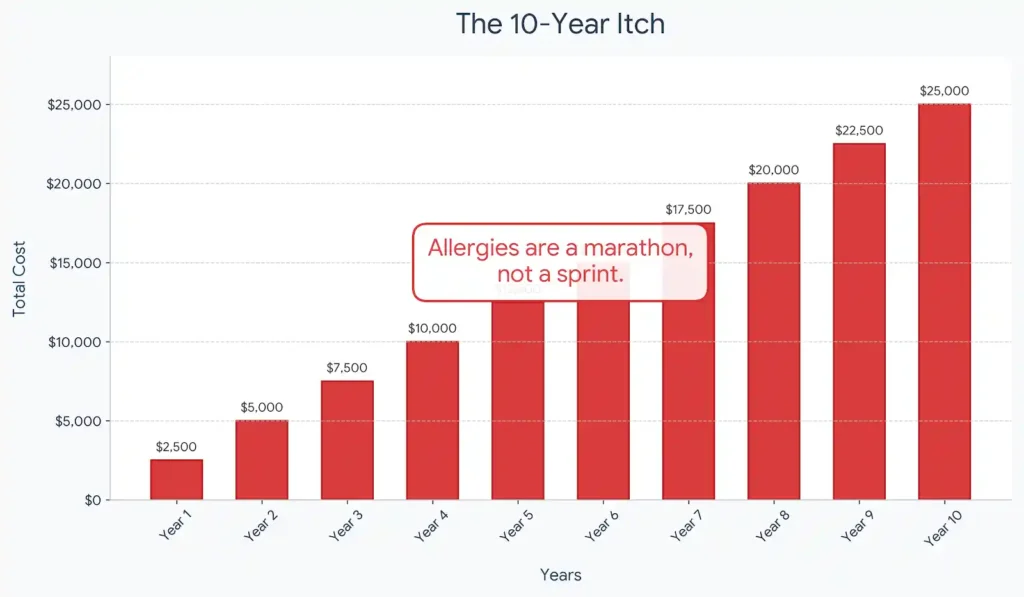
The “Puppy Rash” Insurance Trap
Because allergy management can cost an insurer tens of thousands of dollars over a dog’s life, they are desperate to deny these claims.
The strategy they use is identical to the pre-existing condition trap I warn owners about with BOAS surgery.
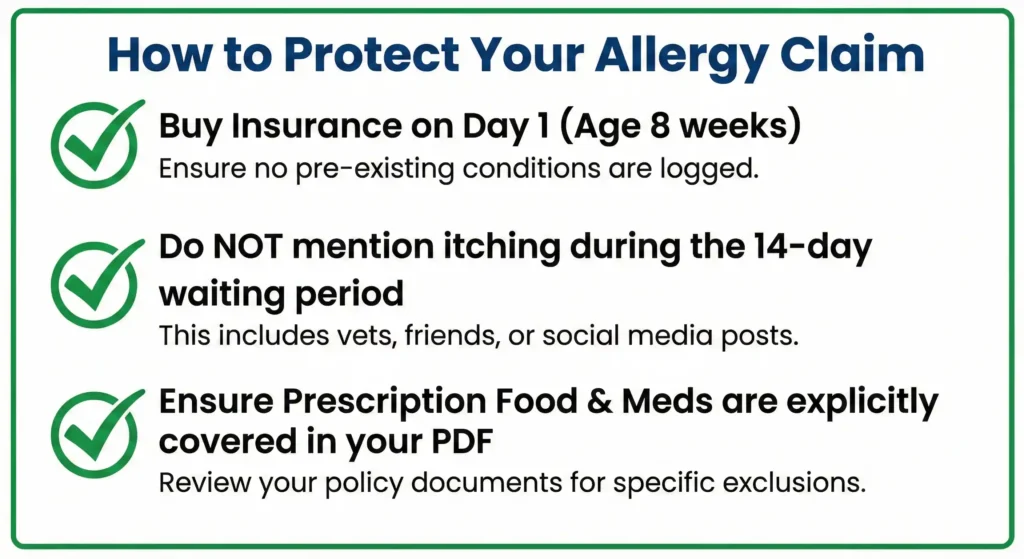
Imagine you take your 3-month-old Frenchie to the vet for their final puppy shots. You casually mention, “He has been scratching his ears a lot, and his belly looks a little pink.” The vet gives you some medicated wipes, writes “suspected minor dermatitis/allergies” in the chart, and you go home.
You buy pet insurance the next day.
Two years later, your dog’s allergies explode. They need $200/month Cytopoint injections and a $1,000 allergy panel test. You file a claim. The insurance adjuster pulls the records from that puppy visit, sees the word “dermatitis,” and permanently denies all allergy coverage for the rest of your dog’s life.
If you want your pet insurance to cover Apoquel, Cytopoint, and dermatologist visits, you must buy the policy the minute you bring the dog home—long before they ever scratch an itch in front of a veterinarian.
Accident-Only Plans Won’t Save You
I constantly see owners trying to cut corners by purchasing $15/month accident-only policies.
Let me be perfectly clear: severe skin allergies, ear infections, and skin fold pyoderma are biologically classified as illnesses. If your dog scratches their own eye and causes an ulcer because their face is so itchy, an accident-only plan will deny the claim, stating that an underlying illness caused the injury.
To cover dermatology, you must have a comprehensive Accident & Illness policy.
Does Insurance Cover Prescription Allergy Food?
This is a massive hidden expense. If your dog is diagnosed with food allergies, the vet will prescribe a specialized Hydrolyzed Protein diet (like Royal Canin HP or Purina Pro Plan HA). A single bag can cost $130, and your dog has to eat it forever.
Will insurance pay for it? It depends entirely on your provider.
- Trupanion: Generally covers 50% of the cost of prescription therapeutic diets if explicitly prescribed for a covered illness.
- Spot / ASPCA: Will cover prescription food only if it is used to dissolve bladder stones, but they typically exclude food used for general allergy maintenance.
- Healthy Paws: Excludes all prescription food entirely.
If you suspect your Bulldog is going to have food allergies, you must read the “Prescription Food” section of the policy exclusions before you buy.
My Final Verdict
Do not underestimate the financial devastation of a chronically itchy dog. Buying a premium pet insurance policy with unlimited annual payouts is the only way to guarantee you can afford the $200/month injections your dog needs to live comfortably. Lock in the coverage early, keep their records clean during the waiting period, and let the insurance company foot the bill for their lifelong Apoquel prescription.
Frequently Asked Questions (FAQs)
-
Are intradermal allergy tests (skin pricks) covered by pet insurance?
Yes. If your policy covers allergies (meaning they are not pre-existing), comprehensive plans will cover the diagnostic testing. This includes both expensive blood panels (RAST testing) and the gold-standard intradermal skin testing performed by a veterinary dermatologist, which can cost up to $1,000.
-
Does pet insurance cover immunotherapy allergy shots?
Yes. If your dermatologist formulates custom sublingual drops or injectable allergy serums (immunotherapy) specifically for your dog’s environmental triggers, it is covered exactly like any other prescription medication, provided the underlying allergies are not pre-existing.
-
What is the waiting period for skin allergies?
Skin allergies fall under the standard “Illness” waiting period for almost all US pet insurance companies. This is typically 14 days from the date your policy becomes active. If your dog shows any signs of itching, ear infections, or redness within those 14 days, it will be excluded forever.
Disclaimer: The information provided on Flat Face Insurance is for educational and consumer advocacy purposes based on independent research of US veterinary dermatology costs. I am not a licensed veterinarian or an insurance underwriter. Severe allergic reactions and skin infections require professional veterinary diagnosis and treatment. Insurance coverage for prescription medications and therapeutic diets varies widely by provider. Always request a full sample policy document and read the “Exclusions” page carefully before making a financial decision.